
The Minerva transported Irish convicts, including prisoners from the 1798 Irish rebellion, to New South Wales. Two of my paternal ancestors were aboard, but not as convicts. Both were free settlers whose husbands were soldiers in the New South Wales Corps guarding the convicts, and both women gave birth to daughters on the ship while it was still in Irish waters.
I know this because the ship’s surgeon, 21-year-old John Washington Price kept a journal which documented his experience. I’m grateful because it gives an extraordinary snapshot of my ancestors’ lives. There are three entries from 1799 which specifically reference my 5x great-grandmothers, Catherine and Mary.

Catherine
Catherine Mooney married Terence McMahon in Wicklow in 1796. While their first child, a son named Francis, was born in Ireland the next year, the situation was different by the time Catherine was pregnant with their second child. They were bound for life in a new country.
Tuesday March 26th
Strong breezes from W.N.W. to W.S.W. and cloudy, squally, weather, with frequent showers of rain; morning I was called to see Mrs. McMahone a soldier’s wife, who, I was told, was in labour, but on visiting her, found no symptom of immediate labour, her pains being both weak & few — many of the convicts, who have been dangerously ill — are recovered, but unfortunately they are succeeded by others, the most of their complaints being epidemic.
Wednesday March 27th
Moderate breezes from W. to W.N.W. in the forenoon, but cloudy & squally at noon with heavy showers of rain, at 2 A.M. was called to see Mrs. McMahone, whom I found in strong labour & at 6 A.M. deliverd her of a daughter — which is to be named Elizabeth, when I retired I left the mother & child in a tolerable state.
– John Washington Price and Pamela Jeanne Fulton (editor), The Minerva Journal of John Washington Price: A Voyage From Cork, Ireland, to Sydney, New South Wales, 1798-1800, Melbourne University Press, Carlton, Victoria, 2000, p. 13.
Mary
Mary How, or Howe, was aboard the Minerva as the wife of William Coleman. With the ship delayed and still in the harbour at Cork, she gave birth four months after Catherine did.
Monday July 29th
Moderate breezes from N.E. and fine pleasant weather, at 4 P.M. Mrs. Coleman wife of one of the soldiers, was taken ill with the pains of labour and at 5 P.M. was safely deliverd of a daughter, to be named Anne Coleman; this woman spent the most part of the day on shore, and was only come on board a short time when she was taken ill.
– John Washington Price and Pamela Jeanne Fulton (editor), The Minerva Journal of John Washington Price: A Voyage From Cork, Ireland, to Sydney, New South Wales, 1798-1800, Melbourne University Press, Carlton, Victoria, 2000, p. 55.
John Washington Price
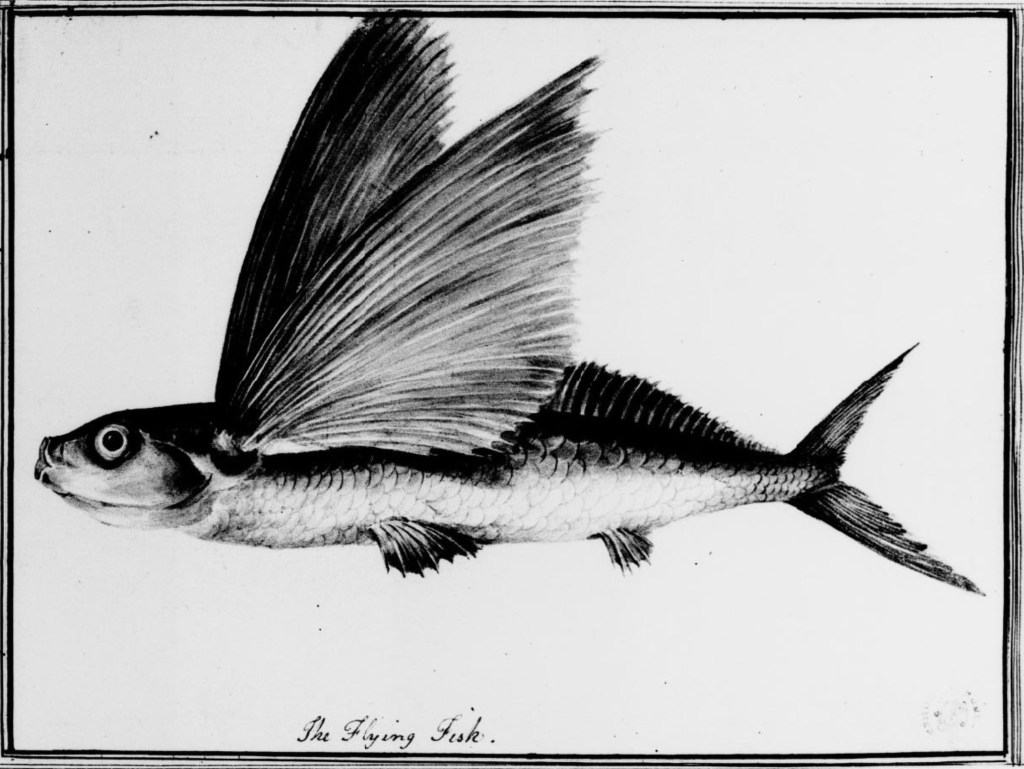
In August 1799, the Minerva weighed anchor and began its journey to the other side of the world. John Price continued his journal narration, sometimes including coloured sketches (shown here in black-and-white).
No journey is without hazards, especially when travelling such a distance. Dealing with medical matters like dysentery were a priority for Price. In fact, he described the convicts as being “in the most wretched, cruel and pitiable condition [he’d] ever seen human beings in”.
There was more to manage as well. At one point on the trip, Price returned to his cabin to find the third mate rifling through his belongings. It was later discovered that a case of chocolate bought in Rio de Janeiro was short five cakes of the sweet treat. The ship also encountered hostile vessels, and one evening an alarm sounded for fear the ship had run aground or been hit by a whale, though circumstances mean it’s more likely it had been an earthquake.
On arrival at Port Jackson in January 1800, Price reported to Surgeon General, William Balmain to whom he gave his medical journals and details of expenditure on medical supplies. He had dinner appointments with civil and military officers, and with Governor John Hunter and his family. Price described meeting local Aboriginal people. He also went on excursions, exploring further afield by boat and walking. His journal gives fascinating descriptions of life and social dynamics in the colonial settlement.
Catherine and Mary
What happened to Catherine, Mary and the children born on the Minerva? Catherine’s daughter Elizabeth went on to marry at the age of sixteen, and had nine children. Sadly, Mary’s daughter Anne died as a young child. The coincidences linking Catherine and Mary didn’t end with the Minerva, though.
Catherine’s husband Terence drowned in September 1801, just a few months after the birth of their third child, John. She remarried within six months to Irish convict Patrick Humphreys, who had received his ticket of leave and enlisted in the New South Wales Corps, so he would have known the McMahon family before he married the widowed Catherine. Patrick and Catherine had six children together, living in the area now known as Watsons Bay, in a house they named Wicklow Cottage.
Mary and William Coleman had another child, named John. Then William was sent to work on Norfolk Island and Mary went with him. Also stationed there was another soldier, William Spears. Mary appears to have separated from William Coleman, and moved in with William Spears with whom she had a son James, born on Norfolk Island in March 1804 and another son, William born in Sydney in April 1806. Mary and William Spears finally married in July 1806 and had another six children.
Eventually, Catherine’s son Thomas Patrick Humphreys, married Mary’s daughter Mary Spears, and Thomas and Mary are my 4x great-grandparents.

Selected references
Price, John Washington and Fulton, Pamela Jeanne (editor), The Minerva Journal of John Washington Price: A Voyage From Cork, Ireland, to Sydney, New South Wales, 1798-1800, Melbourne University Press, Carlton, Victoria, 2000.
Australian Joint Copying Project, Journal of John Price kept on the convict transport Minerva (118 ff.), http://nla.gov.au/nla.obj-1087162939, accessed 31 July 2024.
Hall, Barbara, The Rebel Ship Minerva: Ireland to New South Wales, 1800, Barbara Hall, New South Wales, 2015.
 Untangled Family History
So much had to happen for your 4th great grandparents to marry each other. I’m fascinated by the doctor’s wonderful journal!
LikeLiked by 1 person
If you can find surgeon’s journals for the ships any immigrant ancestors travelled on they are wonderful sources, as long as you can interpret the handwriting!
LikeLike
Fantastic! What long-odds to have your 4th great-grandparents come together. Your story certainly highlights the unexpected paths two women’s lives could take 200+ years ago. Thanks for sharing!
LikeLiked by 1 person
[…] Catherine McMahon nee Mooney was a free settler aboard the convict ship Minerva. Her then husband Terence McMahon was a soldier […]
LikeLike
I too am a descendant of Patrick and Cahterine and have just visited Watsons Bay to get a feel of where they lived.
Catholics were denied the practice of the Catholic faith and they had to marry in the C of E Church and apparently Catherine made her disgust known to Rev Samual Marsden.
Later they were the first parishioners of the Our Lady Star of the Sea,,Watsons Bay, and the original Church still stands in the grounds of the community there – they were granted 4 acres of land there. They seem to have been the first people to have Mass said regularly in their home.
The family donated land at Kincumber to establish the Catholic Church and an orphanage run by the Sisters of St Mary Mackillop.
Patrick was a true character. The English soldiers took the family cow and refused to give them any milk so Patrick delivered Irish justice and shot the cow saying “If we can’t have milk neither can you”. He soon found himself on board a convict ship on a trumped-up charge but what an impact they both had on or land, bless them and all the sufferings that they and our other convict forbears endured, for themselves and for us.
We do well to remember that the freedoms that we have as Australians came at a high price.
LikeLike
Thanks for commenting John. There’s such a big extended family descended from Patrick and Catherine! I’m curious to know if you have any sources for the story about Patrick and the cow? I’ve heard about it before but it seems to be family lore passed down. I’ve been hoping to uncover a newspaper report or something else to help confirm the story. Would love to know if you have anything further about this. Thanks.
LikeLike