
If you have Catholic, or even Protestant, ancestry you might be aware of the religious tradition of holy cards. Perhaps you’ve even been fortunate to find or inherit holy cards which include information about relatives, like I have. They can be a valuable source of information.

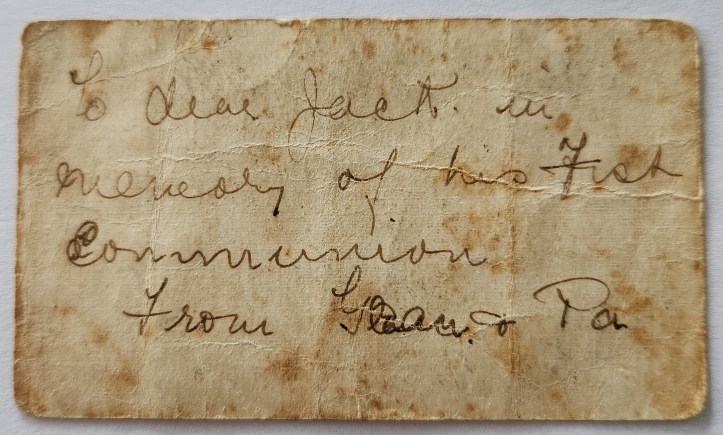
The history of holy cards, sometimes called prayer cards, memorial cards or Bible cards, dates back to the Middle Ages, when they were created as keepsakes for pilgrims. The first cards of this type were made using woodcut printing.
Later they were used to recognise religious events like someone’s First Communion or Confirmation, and as tributes memorialising loved ones who died.
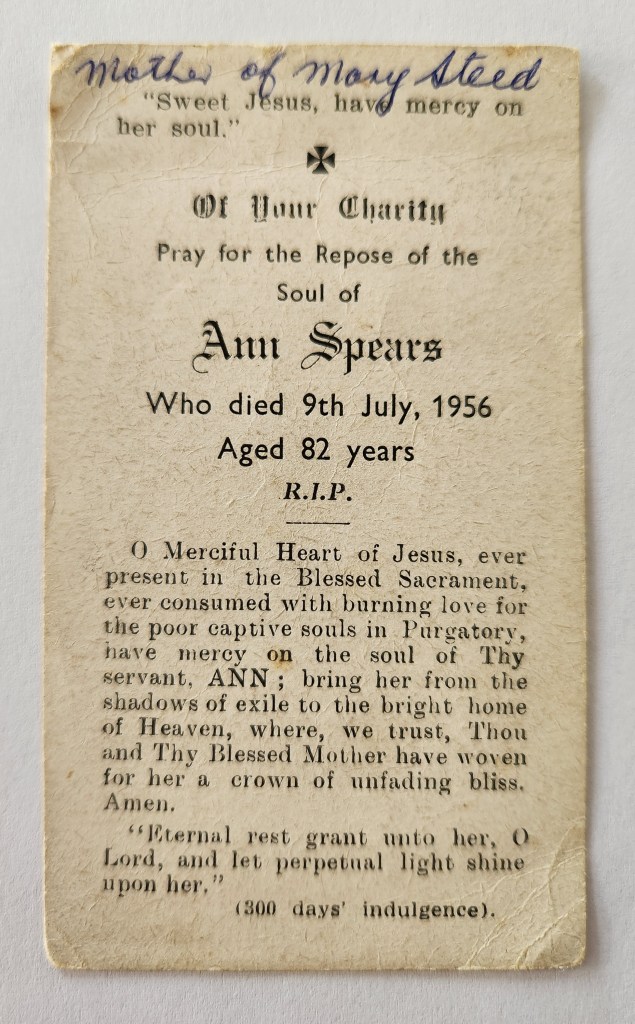
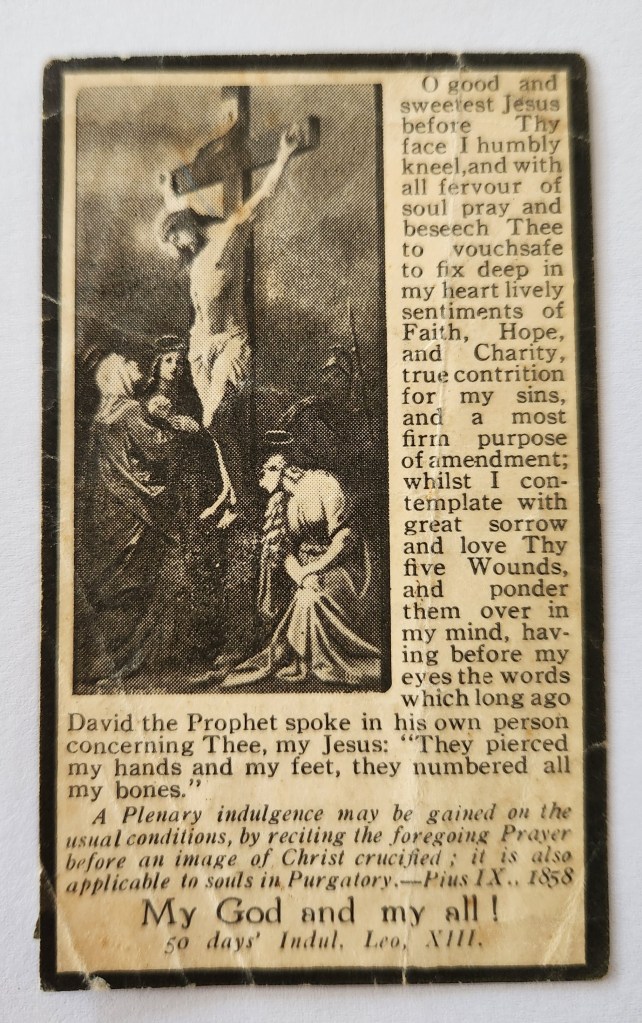
Somewhat ephemeral due to being made from paper, holy cards can be simple or elaborately decorated and often include a prayer or a quote from the Bible. There may be specific symbolism in the chosen words or image, too, especially when used as memorial cards.
Holy cards often have personal details printed or written on them. The kind that could give you names, dates and places which can be used for further research, or as further evidence of what you’ve already discovered. They may also tell you something about the person who gave or received them. Some of those I have also include handwritten ‘extra’ information.
Being small and thin, you might have a holy card amongst your family papers, or hidden in a family Bible, and don’t know it.


 Untangled Family History