
In an attempt to make a breakthrough on a brick wall for my 3x great-grandfather Primeiron Harris, aka Primeiron Grant, I used the collateral and cluster research methods to go down a research rabbit hole belonging to the family of his paternal uncle’s wife.
Cluster research is sometimes known as the FAN club (Friends, Associates and Neighbours) method. Collateral research is similar, researching people who are not direct ancestors. The idea is that researching people who are connected as friends, neighbours, colleagues or in-laws, can sometimes elicit useful information and help uncover more about an ancestor’s life. It’s why I include siblings and extended family in my tree. You never know when it might help make a connection or resolve an uncertain relationship.
I researched the family of Harriet Marsh, who was married to William Henry Harris, the brother of Primeiron’s father John Harris, although I’ve not yet found a marriage record for them. It was Harriet and William Henry Harris who brought Primeiron to the Swan River Settlement, and then New South Wales, when he was just a boy.
My starting point was being given the transcript of a letter written to Harriet Harris nee Marsh in 1855. A lot of details are included. They were very helpful, and despite not having the original letter, relying only on a transcription, I was able to track Harriet’s close family. Would they uncover further details about Primeiron’s parents or grandparents?
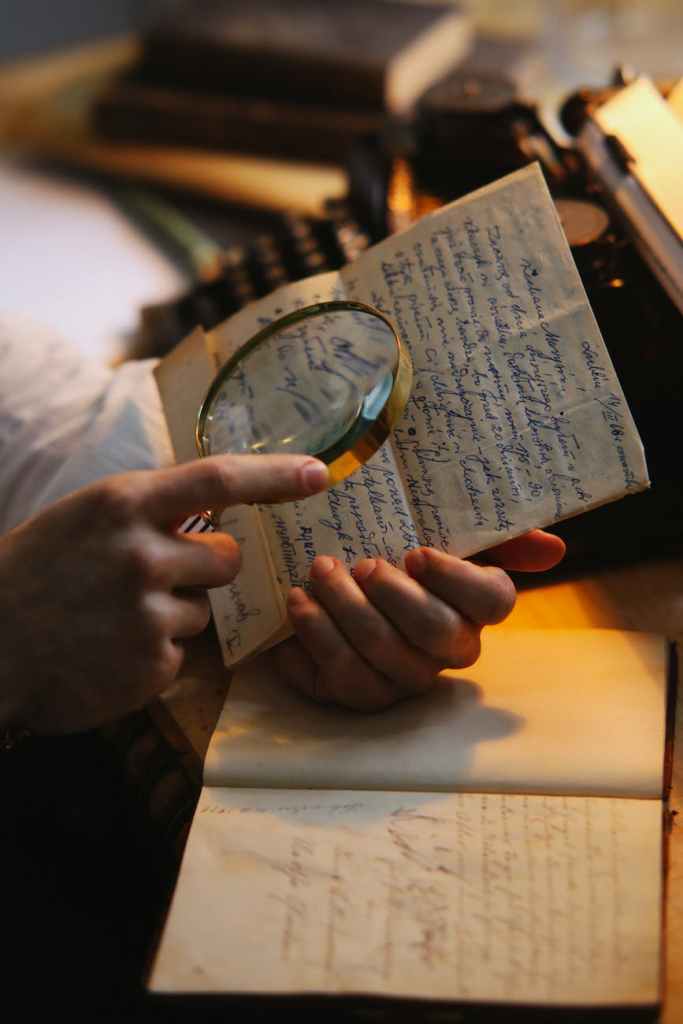
Here’s the transcription of the letter. Look at how many names, addresses and other information it gave me! Plus there are some fascinating comments about world events of the time.
My Dear Aunt,
My aunt Mary Carpenter, your sister, is much surprised you never write to her and thinks you very unkind in neglecting to do so. She is very anxious to know what has become of you and has therefore wished me to write and ascertain. I hope you will at once relieve her anxiety by writing to her. Indeed we should all be very glad to hear from you. Your sister Mary, I am glad to say, is in the enjoyment of good health. She has been a widow for 12 years. I regret to say she is in poor circumstances and has had a hard struggle to maintain herself. She is still living a number 8 Willow Road, Goswell Street, London. With respect to myself I am living at 1 Welcroft Cottage, Shrubland Road, Dalston, London. Having recently purchased this house chiefly on account of its large garden for my family of four children. I have also another house which I formerly lived in but have not left. This little property is worth 60 pounds per annum and has been acquired by my own industry and economy in the character of a barrister’s clerk. With respect to my brother, Henry (who answered a letter for you and I made enquiries some time since). He is train bearer to the Lord Chief Baron [of] the Exchequer. A situation which enables him to maintain himself in respectability but not a wife and family. He is single and there is no prospect of his marrying. With respect to my eldest sister, Ann (now Mrs Searles) of 49 Whitcombe Street, London. She is comfortably situated in life without family. With respect to my sister Elizabeth; she is in service and I am happy to say we are all well and hope you, uncle and cousins are all the same. I should very much like to see you all but that pleasure is denied me. I have but a faint recollection of you. I well remember my poor brother Tom playing the violin while his fair cousin Mary Ann danced and also that cousin William had a dark complexion. I also remember when very young that some of my school fellows had at one winter been attacked by some big boys with snowballs, who came to my brother Tom and others to assist them to beat the big boys off and to our surprise, on arrival, we discovered cousin William among our opponents. My youngest cousin, of course, I have never seen. In your last letter you stated this adventurous gent had gone to the gold diggings. I hope he has been successful. Has he made his fortune at it? And now for my fair cousin Mary Ann; I suppose she is now the mother of numerous offspring and that I have a large number of second cousins to thank her for. I hope she is well and happy and got a good husband. I presume you are tolerably acquainted with [the] state of Europe. I am glad to say that although our gallant army have not yet taken Sebastopol, they have gained many battles and clearly proved beyond dispute that the Rasputins are no match for them in the open field and we have gained a great advantage over them lately inflicting great losses on them and I hope that before another winter, the allies will be in possession of the Crimea and this is by no means unreasonable to suppose from the great advantages we now obtained over them for it is quite clear they cannot now feed a large army there while we are in possession of the seas …. to the present time our losses have been very great but this is only the result of our bungling incompetent government but the people are now aware of the cause and are determined to have the right men in the right places …. Our convalescents from the Crimea are treated very kindly (poor fellows) and are thought much of by the people. What are the people of Australia about? They ought to be more up and alive to their interests than they appear. Why not have a government of their own instead of one so many thousands miles off but I suppose it will be so before many years. I think it will be more for the interests of the colony when it is so and now in conclusion, wishing you every felicity this world affords, believe me.
Your affectionate nephew,
John Marsh.
Thank you John Marsh for writing such an informative letter! Using what it told me, and records of births, deaths, and marriages, as well as the census, probate, and newspapers, I was able to build out the Marsh family tree. Sadly there was no sign of the Harris family living nearby.
Harriet’s parents appear to be Thomas Marsh and Sarah Ware. Her older sister, Mary Ann Marsh, mentioned at the beginning of the letter, married shoemaker John Carpenter when she was 34 and doesn’t appear to have had any children.
Harriet’s brother Thomas Marsh married Nancy Grindon in 1815, and one of the witnesses at their marriage was Harriet herself. The other was her sister Mary Marsh.

Thomas and Nancy Marsh went on to have five children:
- Thomas Marsh junior, known as Tom – The way he’s described in the letter suggests it’s possible he died young, but I’ve not been able to conclusively trace him
- Anne Marsh who married William Searles, a saddler and harness maker, when she was 35 and doesn’t appear to have had any children – In 1851, a year before her marriage, Anne was working as a court woman of the Exchequer
- John Marsh who married Eliza Madder in 1847 and had eight children – John is the one who wrote the letter to his aunt Harriet, and moved from being a barrister’s clerk to a Chancery clerk
- Charles Henry Grindon Marsh, known as Henry, who married Jemima Matilda Guley and had seven children – Henry’s marriage was only four years after John’s letter said it was unlikely he would do so suggesting he did very well for himself, and indeed he went from train bearer to usher and tipstaff in the Court of the Exchequer
- Elizabeth Maria Marsh who married John Hughes Hosking when she was 40 and divorced him when she was 48 – A couple of years before her death, Elizabeth was living with her niece Ada
There are some elements of the letter I might be able to delve into further, but the research has so far not yet helped with my brick wall, although it does confirm some of the dates and places Primeiron’s uncle was present.
Selected references
John Marsh to Harriet Harris [nee Marsh], letter, 1855, original held in private collection.
 Untangled Family History