
It’s been said that oral family history will fade within three generations. That means stories told by our grandparents may be lost by the time they reach us or perhaps the next generation.
For a family historian that’s a scary thing to consider, because although we can discover information through official records and genetic genealogy, nothing can replace the memories of people and experiences. They’re unique and valuable.
I’m grateful to be custodian of several original diaries and memoirs belonging to my grandparents and great-grandparents, as well as copies of a couple more. I’ve also started recording some oral history conversations with relatives.
The three stories below were all shared later in the lives of those concerned, and are memories of childhood events. More than 100 years after the events took place, they’re wonderful windows into family, local and social history.
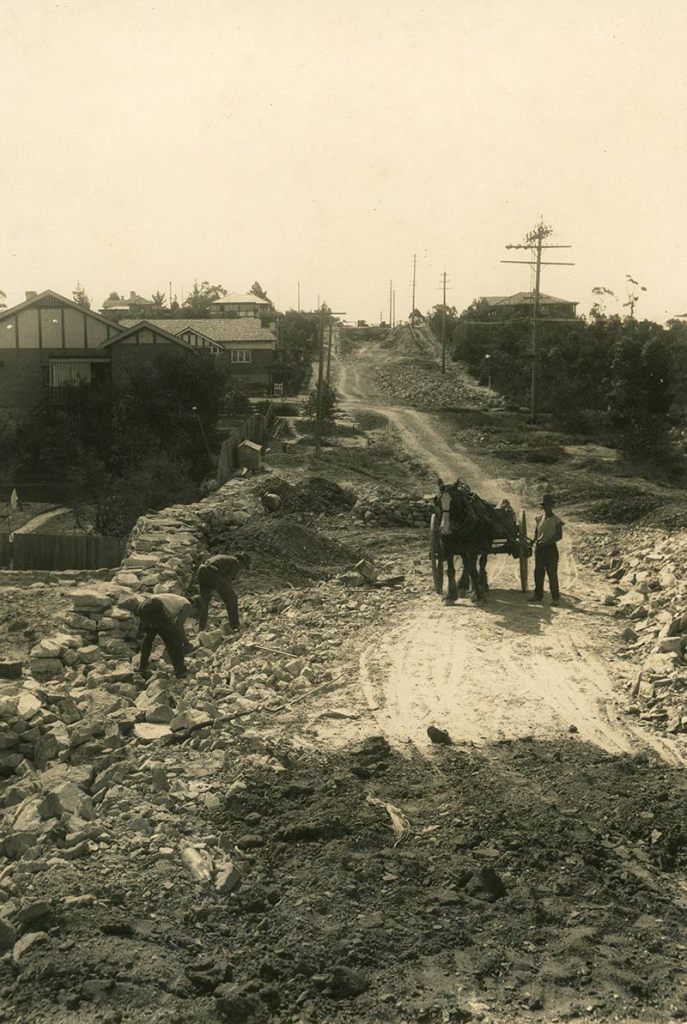
This memory, written by my grandmother, describes Sydney in the 1920s when it was growing quickly.
The roads were still being made and steam rollers used and they really scared me [with] all the huffing and puffing. I vividly remember I rounded the corner of Barambah Road and came face to face with this huge steam roller belching great puffs of steam, struck dumb with fright and when the driver offered to take me up in the cabin with him I bolted home, Mum after me.
During the early days at Roseville new homes were rapidly being built and there was blasting during the days as rock was cleared. The men would have a metal rod a bit thicker than a broom handle, and standing over rock would drop this on a rock continuously until a deep hole appeared, the dynamite dropped in, a shout for all nearby to move off, then they pressed the detonator and bang! The metal rod was called a jumper and it took a good while to make the very deep hole.
My great-grandfather told his daughter about travelling to attend his grandmother’s funeral. It’s a story that was later shared with me in an oral history conversation.
[They came down by steamer and] I’m not sure where the steamer went to, but Grandpa Primeiron came down to fetch them in the dray and take them back past Araluen and up the hill to Majors Creek where his grandmother Julia had died, and they were coming to the funeral. And Dad was terrified because … even now in the car it’s a pretty steep climb, so he was hiding his head under the canvas as they came up and he would have been about six at the time, going on the dates, and he told me at the time he asked who the party was for, so they were obviously holding a wake, an Irish wake, for Julia when she died.

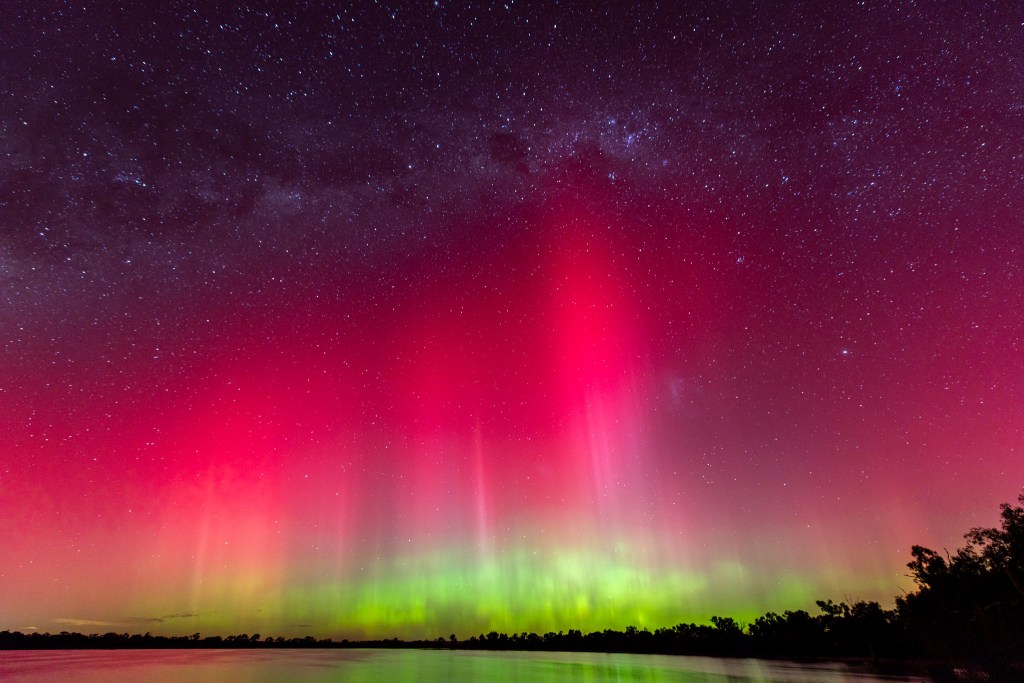
My great-grandmother wrote about her childhood in a notebook she titled ‘My Life As Far Back As I Can Remember’. One of the events she describes is the excitement of seeing the southern lights (Aurora Australis) in outback New South Wales.
I woke up one night and heard quite a commotion going on. I got out of bed and found my parents and all the rest of the people at the homestead very excited. Everyone was in their night attire. I remember my father putting his short coat around me, he took my hand and led me into the garden with Mother, my sisters and brother, and of course everyone else. I just could not understand what was going on, until I looked up into the sky. It was pink red and seemed to be rolling around. That is how I remember seeing it as a child. All the people thought it was the end of the world. Some people in the towns prayed in the streets. It really was frightening to adults as well as children …. It could be hundreds of years before it happens again. Needless to say everyone was very sleepy next day. It was big news for some weeks.
These memories are part of the patchwork of stories that make up my family history and give insight into the lives of my ancestors.
If you’re fortunate to have relatives who’ve written about their life or family, make sure you read what they’ve written because you never know what you might learn and how it could help your research. If you have willing relatives, record an oral history discussion with them. And if you haven’t written about your own life, start now. Write it down, or record it, so you can preserve your memories and be a storyteller for your family’s future generations.
I must admit I’ve never kept a diary, or written a memoir, but I know I should make time to do so. I should also get cracking on recording some more oral history conversations.
 Untangled Family History
What you say about memories is so true. That is why we have to record them. I am just writing about my relatives’ graves at Darton, Barnsley and Mexborough. I got an email from Family Search with a link to Find a Grave. I will send you my post, or the link, if you like.
LikeLike
Thanks. I’d like to read your post.
LikeLike
I have just added my post so there should be 4 there now. The name is Climbing my Family Tree2.blog. There is one about remembrance and the last one, “grave matters”. Let me know what you think.
LikeLike
I think I’ve found your site but can’t find the posts you’ve referenced. Perhaps you can share a direct link to the posts. Thanks.
LikeLike
OK. I’ll have a look.
LikeLike
Hi Sarah. I have just had another look and if you try https://wordpress.com/posts/climbingmyfamilytree2.blog hopefully you will find it.
It says there are 4 posts published.
Stephen
LikeLike