
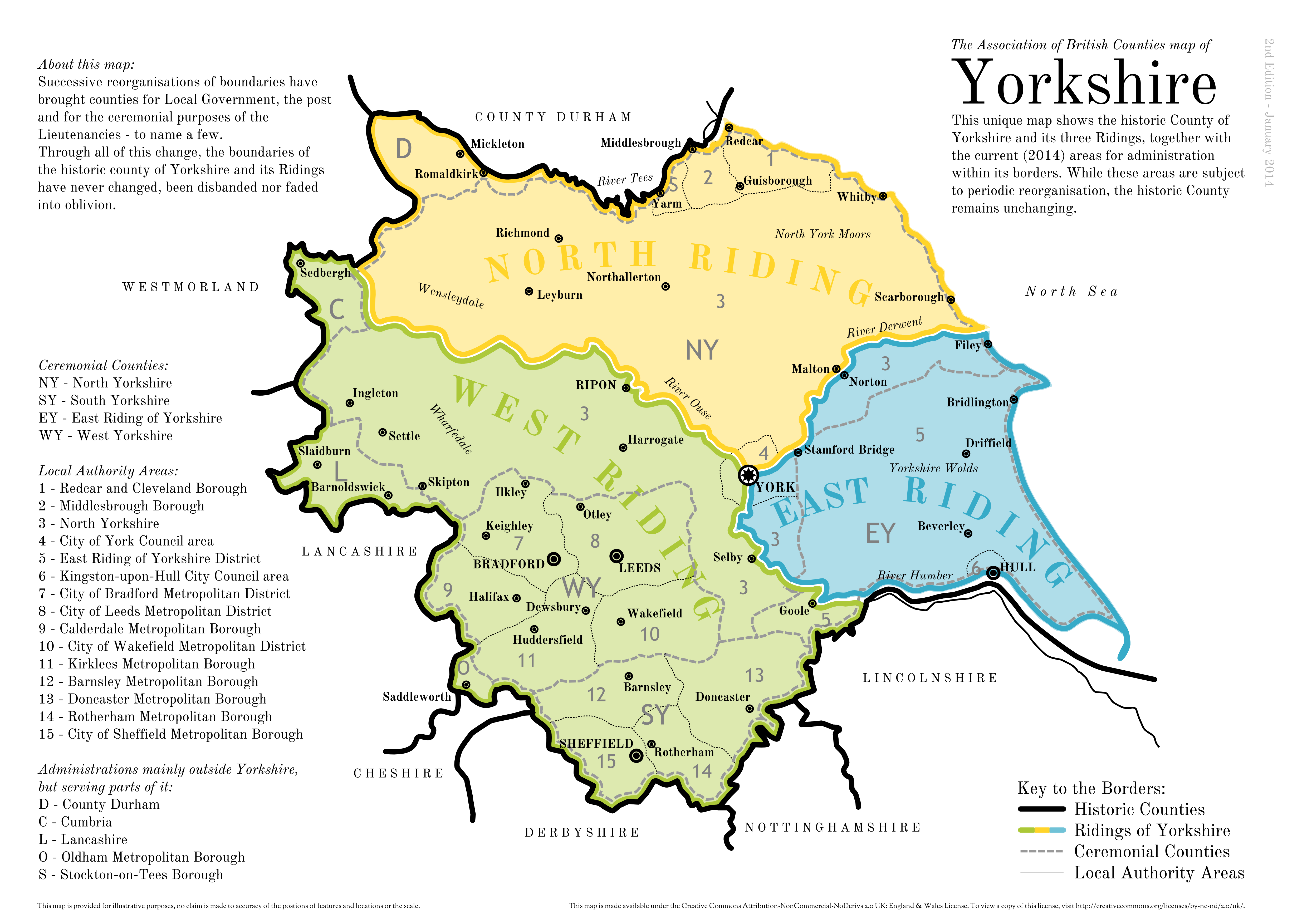
My 4x great-grandparents Mathew and Elizabeth Pickering had ten children born between 1791 and 1805. They lived in the West Riding of Yorkshire, in the villages of Silkstone and Dodworth, not far from the market town of Barnsley.
Life at this time was particularly hard and the large family would have struggled to make ends meet. As the early 1800s progressed, poverty was pervasive, and there was significant political tension and civil unrest. Perhaps a hard life is what led to four of the Pickering brothers being transported as convicts.
Hard times
In Nottinghamshire as early as 1810, and spreading to Yorkshire and Lancashire, Luddite rioters sought to eliminate the machinery which was taking away people’s jobs and reducing wages. These protests involved threatening letters and factory vandalism.
After the end of the Napoleonic Wars in 1815, the price of food was expected to fall, but the English government introduced the Corn Laws which led to an increase in the cost of living, benefiting the landowners. The working class was furious and calling for the right to vote. Protests and riots led to even higher costs.
Then came 1816, the year without a summer. A volcanic eruption in Indonesia had a dramatic impact on climate change. It led to colder weather, unseasonable frosts, and failing crops, which in turn led to increases in food prices and famine.
In 1819 a large, peaceful protest in Manchester turned ugly when attempts to arrest the protest’s speakers became violent. 18 people died and hundreds were injured in the incident which became known as the Peterloo Massacre.

Peterloo Massacre (or Battle of Peterloo), published by Richard Carlile, aquatint and etching, published 1 October 1819, 16 5/8 in. x 19 1/4 in. (421 mm x 489 mm), Reference Collection, National Portrait Gallery, NPG D42256. Image used CC BY-NC-ND 3.0 DEED.
The 1820 Yorkshire Rebellion
Hot on the heels of this tragedy came the Yorkshire West Riding Revolt of 1820, also known as the Yorkshire Rebellion.
In early April, large contingents of men from different locales planned to converge on Grange Moor near Huddersfield. The Dodworth group was said to be led by John Pickering, likely the eldest of the Pickering brothers. However, when they arrived there were many fewer men than anticipated and they soon fled believing they’d been betrayed.
Warrants, known as a True Bill for High Treason, were issued for 24 men including John Pickering. However, John does not appear to have been taken into custody or tried, although others were arrested and convicted. At least ten of the men were transported, while a long newspaper campaign led to the pardon of others some two years later.

Four brothers become convicts
Six years after the Yorkshire Rebellion, three of the Pickerings – Richard and his older brothers John and Matthew – allegedly broke into a cottage in Stainborough, not far from Barnsley. Like Silkstone and Dodworth, Stainborough was small, quiet, and rural, with nearby land a mixture of woods and fields under the purview of Wentworth Castle.
The brothers were reportedly seen heading in the direction of the cottage at about two in the afternoon. Quite a swag of items was alleged to have been stolen: 24 gowns, 4 petticoats, 4 sheets, 12 aprons, and 3 stones of bacon (enormous joints of meat).
The following day, at the Angel Inn in Wakefield, the brothers apparently sold some of the items to two servant girls, telling them they belonged to the wife of one of them who had left him. Someone must have been suspicious though, because soon a constable arrested them.
Richard 21, Matthew 25, and John 29, were charged and convicted of house breaking. Sentenced to death, the brothers were instead transported to New South Wales aboard the Prince Regent in 1827.
It’s been suggested they were targeted for being agitators in the Yorkshire Rebellion. While that’s possible, it’s also possible hard times led them to steal to support their families. A fourth brother, Joseph, was transported in 1830 for stealing bacon. He was 31 when he arrived on the Marquis of Huntly.

The Pickerings in Australia
Richard Pickering left behind a wife, Hannah Wright, who died of consumption in 1838. In Australia he went on to marry Ellen Kennewell in 1845 and had eleven children, including my 2x great-grandmother Harriet. Richard died at the age of 86.
Matthew left behind his wife Mary Lee and baby son George. When Mary died in 1835, George was ten and taken in by relatives. George married and had a family of his own, and they eventually travelled to Australia as assisted immigrants. After Mary’s death, Matthew married Mary Ann Dawes and had nine more children before he died in Sydney in 1885.
John had been in the African Corps from 1812 until he was discharged in 1818 due to a leg ulcer. He died in 1830, just three years after being transported to New South Wales.
Joseph’s wife, Elizabeth Depledge, and five children were left behind when he was transported. He died in New South Wales in 1836 at the age of 37. One of Joseph’s English grandsons, William Pickering married his Australian cousin, and my 2x great aunt, Ada Harriet Vaughan.
If you’re related to the Pickering family, or have information about them, please get in touch.
Selected references
The Peterloo Memorial Campaign, ‘The Massacre’, https://www.peterloomassacre.org/history.html, accessed 25 May 2024.
People’s History Museum, ‘What was the Peterloo Massacre?’, https://phm.org.uk/blogposts/what-was-the-peterloo-massacre/, accessed 26 May 2024.
History Extra, ‘The 1815-46 Corn Laws: your guide to the crisis and why they were repealed’, https://www.historyextra.com/period/victorian/corn-laws-guide-what-impact-why–repealed-benefit/, accessed 26 May 2024.
The National Archives, ‘Why did the Luddites protest? Political reform in 19th century Britain’, https://www.nationalarchives.gov.uk/education/resources/why-did-the-luddites-protest/, accessed 25 May 2024.
The National Archives, ‘Winning the peace: Beyond Peterloo’, https://blog.nationalarchives.gov.uk/winning-the-peace-beyond-peterloo/, accessed 25 May 2024.
Veale, Lucy and Georgina H. Endfield, ‘Situating 1816, the ‘year without summer’, in the UK’, The Geographical Journal, 182 (4) August 2016, https://www.researchgate.net/publication/306042378_Situating_1816_the_’year_without_summer’_in_the_UK, accessed 27 May 2024.
‘Yorkshire Assizes. Tuesday, March 27.’ Sheffield Independent, 31 March 1827, p. 2.
‘Yorkshire. Lent Assizes, Saturday, March 24. A Calendar.’, The Yorkshire Gazette, 17 March 1827, p. 2.
New South Wales, Australia, Convict Indents, 1788-1842, Ancestry.com, accessed 1 September 2021.
New South Wales, Australia, Tickets of Leave, 1824-1867, Ancestry.com, accessed 1 September 2021.
Wentworth Castle. ‘Our History’, https://www.wentworthcastle.org/history-restoration/, accessed 11 September 2021.
Historic England. ‘Wentworth Castle’. https://historicengland.org.uk/listing/the-list/list-entry/1000415, accessed 11 September 2021.
Kaijage, Frederick James. ‘Labouring Barnsley, 1816-1856: A Social and Economic History’, PhD thesis, University of Warwick, 1975, https://wrap.warwick.ac.uk/34689/.
‘York Castle. Tuesday, March 27.’, Leeds Intelligencer, 29 March 1827, p. 2.
 Untangled Family History
Amazing! I have come across some Pickering marriages in my tree. One of my branches, the Trueloves, were from Darton and Staincross, which are near Barnsley. My father’s mother’s mother’s maiden name was Anice Truelove. My grandmother was born at Mexborough in 1901 and died at Coffs Harbour in 1982.
I have heard of the rebellions you mentioned but didn’t know that any of the men involved were sent to Australia.
LikeLike
That’s interesting. I wonder if there’s a connection. There seemed to have been lot of Pickerings around that area.
If you’re interested in more stories about the Yorkshire rebellion, there’s a book about one of the men transported to Tasmania, John Lindley. https://bluepoppypublishing.co.uk/product/yorkshire-rebel-the-life-and-times-of-john-lindley/
LikeLike
Lindley is another name I’ve come across. Mind you, Darton and Staincross were small places so it isn’t that much of a surprise.
My Dad also has, or had, relatives at Holmfirth. I have photos taken of him when he was a baby or very young.
I will look up what you sent me.
LikeLike
Loved the story and the photos too. I went to Coffs Harbour High School and our motto was Lumen ex Tenebris, which means light out of darkness. The school magazine was called The Beacon. Unfortunately I lost half of mine in the 1996 flood.
LikeLiked by 1 person
[…] Richard Pickering was one of three brothers from Yorkshire convicted of housebreaking and sentenced to death. Given a reprieve, they arrived in New South Wales on the Prince Regent in 1827. A fourth brother was transported for a different offence in 1830. […]
LikeLike
Hi Sarah. I just found the prison record of a John Lindley who was born in 1789. The record was from Wakefield in 1803 so working that out in my head he would have only been about 14!
LikeLiked by 1 person
Not uncommon. There were plenty of youngsters arrested for various reasons.
LikeLike
I also bought that book. It is interesting.
LikeLike
[…] also a twin. She and her sister Josephine were born in Carcoar, outback New South Wales, in 1848 to Richard Pickering and Ellen Kennewell. Harriett had a large family and died aged 92, but it appears that Josephine […]
LikeLike